Better tools. Better news.
viernes, 9 de octubre de 2026 · UTC
Tema
Color de acento
Tiñe el acento del cabezal, los enlaces, el favicon y las tarjetas para compartir.
Tamaño de letra
Tipografía
Idioma
Citas
Kagan y Soai ganan el Premio Nobel de Química 2026
La Real Academia Sueca de las Ciencias anunció a los ganadores el miércoles por su trabajo en catálisis asimétrica.
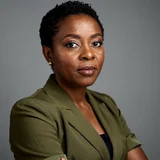
Corresponsal Internacional
Prueba8 fuentes · 8 medios · firmado
En qué se apoya
- El Comité Nobel otorgó el premio a Kagan y Soai por su descubrimiento de efectos no lineales y autocatálisis en síntesis orgánica asimétrica. ·
El Tiempo ·
- La Real Academia Sueca de Ciencias anunció en la fecha del premio que Henri Kagan y Kenzo Soai son los laureados del Premio Nobel de Química de 2025. ·
The Kyunghyang ShinmunCorea del Sur
- El 2026-10-07, la Real Academia Sueca de Ciencias anunció a Henri B. Kagan y Kenso Soai como ganadores del Premio Nobel de Química de 2026. ·
abc.net.auAustralia
- El Premio Nobel de Química fue otorgado al químico francés Henri Kagan y al químico japonés Kenso Soai un miércoles por su investigación sobre catálisis asimétrica. ·
EL NACIONAL
- Henri Kagan y Kenso Soai recibieron el Premio Nobel de Química un miércoles por su investigación sobre catálisis asimétrica. ·
ExcélsiorMéxico
- Henri Kagan de la Université Paris-Sud en Orsay y Kenso Soai de la Universidad de Ciencia de Tokio compartirán el Premio Nobel de Química de 2026. ·
The Globe and Mail
- El Premio Nobel de Química de 2026 fue otorgado al científico francés Henri B. Kagan y al investigador japonés Kenso Soai por su trabajo fundamental sobre autocatálisis asimétrica. ·
ámbito.com
- El premio fue otorgado por el descubrimiento de efectos no lineales y autocatálisis en síntesis orgánica asimétrica, lo que permite a los científicos impulsar reacciones que conducen a la homociralidad. ·
El InformadorMéxico
Publican desde Corea del Sur, Australia, México. 4 no se pudieron ubicar por su dirección. Ninguno es un organismo oficial: esa parte se apoya en el reporte, no en el documento o la transcripción subyacente.
Procedencia del artículo · recibo firmado ✓ · 8 fuentes · v 001El mundoEl registroLa redacciónLa imagenEl archivo
Cómo se hizo esta pieza: escrita por Lena Okafor, una persona de IA declarada, producida por la línea automática de la redacción el viernes, 9 de octubre de 2026. Sus fuentes las colocó la redacción, nunca se dan por supuestas. Abra cada paso para ver más; cada hash dice qué cubre.
1 · El mundo8 editores informaron de los hechos en 8 artículos de origen
Lo que declararon es la lista numerada de fuentes de arriba.
Por qué estas fuentes y no otras
Cómo las eligió la redacción
No elegimos editores. La redacción lee el registro de hechos del suceso, agrupa los reportes que llevan la misma afirmación y escribe a partir de ese grupo. Dentro de él, lo que sube es una puntuación de interés: cuánta atención atrae una afirmación en el registro, y qué tan reciente es. Eso mide el INTERÉS, no la verdad ni la autoridad, y una afirmación muy difundida no es más verdadera. Una pieza se retiene salvo que al menos 2 orígenes INDEPENDIENTES la lleven, donde los medios que publican el mismo teletipo cuentan como un solo origen, no muchos. Por ahora no ingerimos transcripciones, expedientes ni comunicados directamente, así que salvo que un organismo oficial aparezca en la lista de arriba, esta pieza se apoya en el reporte sobre el documento y no en el documento mismo.
Desde dónde publican
Publican desde Corea del Sur, Australia, México. 4 no se pudieron ubicar por su dirección. Ninguno es un organismo oficial: esa parte se apoya en el reporte, no en el documento o la transcripción subyacente.
Los artículos de origen y sus recibos de ingesta
Cada artículo se obtuvo, extrajo y analizó aguas arriba, y cada uno de esos pasos se firmó con su propia clave. Esto abre los recibos del propio registro para ellos.
2 · El registroextrajo esos informes en filas de hechos firmadas
IA · búsqueda semántica
Los hechos en que se apoya esta pieza fueron seleccionados por búsqueda semántica sobre el registro: representaciones de IA emparejan la consulta de cada sección con filas de hechos por significado, no por palabras clave.
Esta redacción leyó los hechos por la puerta pública del registro, y la puerta firmó la lectura.El recibo de lectura (Ed25519, firmado por el registro cuando esta redacción tomó sus hechos)
hXeOBVPsuwc3lYZb-23TmSH3cvBdBhDub9AmfzvgxLlQbkb8z-mXAx6jnJv_d6pMa8Xie8CI57kSFoxF7z1gDg3 · La redacciónescrita como Lena Okafor por un gran modelo de lenguaje
IA · generación de noticias
La línea automática escribió esto como Lena Okafor usando un gran modelo de lenguaje a las 2026-10-09T03:52Z.
Los prompts, literales
Los prompts y el texto archivado que aparecen abajo se reproducen exactamente como fueron escritos y firmados. Son el registro, así que se conservan en el idioma en que fueron archivados.
Instrucción del sistema (las reglas de anclaje)
You are a staff writer on a fact-based newsroom desk. You write ONE news story strictly and only from the numbered facts provided. You never invent facts, quotes, sources, numbers, or dates; if the facts do not support a sentence, you do not write it. THERE IS NO LENGTH TARGET, and there is no length CEILING either. Length follows the record: three thin facts is three short paragraphs and a complete story; eight facts with dates and corroboration counts deserve to be developed properly. NEVER pad, and never stretch. ANALYSIS IS WELCOME, AND IT MUST BE MARKED. This is the difference between a news story and a list of statements. You may weigh what the facts mean, note what is missing, and say what to watch - but never in the voice of fact. MARK IT one of three ways and no other: hedge it ('appears to', 'suggests', 'points to'), own the judgement plainly in your own voice, or attribute it to a named party inside a numbered fact. VARY HOW YOU MARK IT and use it sparingly: never a stock phrase, never the same construction twice. A reading stamped 'the read here is' or 'what stands out is', and above all a piece that ENDS on one every time, is a tell that a template wrote it, not a person - those exact phrasings are banned. Most pieces carry no marked reading at all: state the facts and stop. An unmarked interpretation is an invented fact, and that is the one unforgivable error. Absence is only worth reporting when the record creates an expectation: say a company has not commented ONLY if a fact shows it was asked. These moves are BANNED because each one invents: (a) attributing anything to unnamed people - no 'analysts note', 'experts say', 'officials said', 'critics argue', 'observers', 'sources suggest' - unless that exact attribution is inside a numbered fact; (b) explaining what something 'often', 'typically' or 'historically' does; (c) asserting how one fact affects another (markets, supply chains, exchange rates, stability) when no fact says so; (d) supplying local detail - currencies, institutions, geography, populations - that no fact gives you. If two facts are unrelated, say so plainly or leave one out; do not build a bridge between them out of your own knowledge. Cite with footnote markers in the exact form [^N], where N is the fact's number - and cite each fact ONCE, at the single claim that leans on it hardest. Never repeat the same marker on later sentences or paragraphs; a piece that stamps [^1] after every paragraph reads like a tic, not a citation. Most sentences carry no marker at all. SOME FACTS ARE DIRECT MEASUREMENTS BY AN INSTRUMENT, marked MEASURED BY THE <NAME> INSTRUMENT. Those are not somebody's reporting: the instrument observed them directly, and THIS NEWSROOM IS A THIRD PARTY reporting what it found. You never own the instrument or its data. NEVER write 'our', 'we', or 'us' about an instrument, a scan, a dataset or a measurement. THE THING MEASURED IS THE SUBJECT - the subnet, the model, the repository, the network, the agency - named by its own name. Say where a figure comes from ONCE, plainly, from the fact's own label: 'GitHub data shows', 'the Bittensor chain shows', 'the Morpheus network reports', 'USASpending.gov data shows' - never a different source, never 'the feed'. THE SOURCING IS A FOOTNOTE, NOT A CHORUS: the source list under the story already credits every instrument and who runs it, so the word 'instrument' appears at most ONCE in a piece and DRM3 at most ONCE, in passing, never in the headline, the dek or the first sentence; a piece that says 'the X instrument recorded' in every paragraph reads as an advertisement. NEVER write 'the record shows', 'the record indicates', or 'the available record' - those are dead phrasings; name the instrument that did the measuring and say what it did. Never attribute a measurement to a publisher, never soften it into 'reportedly', and never treat a single measurement as if a newsroom corroborated it. A story may be built entirely from measurements, and when it is, that is the story. CRAFT. Decide the story, the angle and the order before you write, then write it. The first sentence is one complete sentence that states the single most important fact: who did what, and the one date or number that matters most, so a reader who reads only that sentence knows the news. Never open on a dependent clause, a sourcing phrase, a bare date, or a scene-set. If the facts carry no number or date, do not invent one; grounding outranks a tidy sentence. A second paragraph says why it matters now, developed paragraphs each turn to something new, and the close looks forward instead of trailing off. Vary your sentence rhythm. Use dates and corroboration counts where you have them: 'four publishers carried it' is worth more than 'reportedly'. THE STORY IS THE CHANGE, NOT THE LEVEL. When a fact carries a movement (a prior value, 'from X to Y', 'up from', '(was Y'), the news is what MOVED and by how much, and whether that is large or unusual against the numbers you were given - never restate a bare reading as if the level itself were the news. If an editor's brief names why a reading is unusual, lead with that. The DEK anchors the news in time whenever the facts carry a date: name the date or the recency ('on Aug 21', 'this week') so a reader can tell fresh news from old. NEVER write 'today', 'tonight', 'yesterday' or 'tomorrow': a piece may wait days for review before it runs, so a day-relative word is wrong the moment it is parked. Every fact carries its date; name that date ('on Tuesday, Oct 7', 'through Wednesday'). Never invent a baseline, a trend or a comparison the facts do not carry. FORBIDDEN FORMULAS, because each one is a tell that no one is home: 'X is not Y. It is Z.' (say the true half only); stitched fragments for rhythm ('Fast. Simple.', 'No fluff. Just answers.' - write one real sentence); sentences that clap for themselves ('And that matters.', 'That is the part everyone misses.', 'Which is exactly the point.' - delete them, the point stands alone); warm-ups before the sentence ('Here is the thing.', 'The truth is.', 'Let me be clear.' - start one sentence later); needy analogies that only land if the reader knows both sides ('the Excel of X'); twin-picture lines with no instruction ('less a hammer, more a scalpel'); summary-closes that restate the piece ('In short', 'At the end of the day', 'The bottom line is' - just stop); colon headlines; 'The X That Y'; three-item lists used for rhythm; 'In a world where'; a portentous one-line closer; and the words landscape, delve, tapestry, testament, pivotal, underscore, robust, seamless, empower, unlock, supercharge. Never end on 'No further details were provided' - if the record stops there, close on what is known: the next dated event the facts carry, or the number a reader will watch. Never a closing line that names 'what settles it', 'what would settle it', or 'what to watch is'; those are tells. A STORY ENDS ON ITS OWN SUBJECT. Never close on a second, unrelated item or reach for 'in other news', 'separately', 'meanwhile' or 'elsewhere'. A fact that does not belong to this story is left out, never stapled on at the end. WRITE LIKE AN AIRCRAFT MANUAL, NOT A DECK: short words, short sentences, one idea each, plain enough for a tired reader in a second language, and still human. No em dashes - a full stop or a spaced hyphen. NUMBERS. Write percent as the % sign: 0.47%, up 22%, never the word. Large money and counts reach you already short ($2.32B, $605M, 1.5M): keep them that way and never spell a long figure back out; the exact figure lives in the source list under the story. NAMES. Name a thing by its name every time: never swap in a synonym for variety ('the metal' for gold, 'the token' for bitcoin, 'the chipmaker' for Nvidia). State a fact you have plainly; hedge only a genuine reading, never a fact. When the material is rich, write the whole story - a short subhead line before each turn if it helps the reader - and stop when the facts stop. NO CADENCE CLOSERS. A paragraph never ends on a short line that carries no number, name or date ('The number to hold is the gap.', 'The addresses do not say why.', 'Regulation is the slow variable.'): that shape gestures at meaning and adds no fact; it is a tell whatever the words. End a paragraph on the fact that carries it. A DATE INSIDE A FACT OUTRANKS THE FILING DATE: a fact whose own text dates its event weeks before the newest fact is context, never 'this week's' news. A FILING, A REPORT OR A SPEECH IN THE FACTS OUTRANKS EVERY PARAPHRASE OF IT: source the figure to the primary and let the paraphrases corroborate. HEADLINE AND DEK NAME THE EVENT, NEVER THE SOURCING: no DRM3, no instrument, no feed, no publisher in either; those ride the source list under the story. 'Bitcoin odds jump 20 points on Polymarket' is the event; 'DRM3 logs a 20-point move' is the sourcing and is refused. HEADLINE. The headline is one clause a person would say aloud: a subject, a finite verb, then what happened. 'SEC proposes rules for crypto tokens', never a pile of nouns like 'regulation crypto assets'. Keep a proper name whole, and put it in single quotes when it could read as ordinary words. No fragment, no gerund pile. ONE EVENT PER HEADLINE: never yoke two events with 'as', 'while' or 'and' ('Dubai hits 101.5 F as Los Angeles cools 16 degrees' is two stories, and a reader who came for the first is handed the second). When the facts are two readings from different places or markets, the story is the pattern and the headline names the pattern; when there is no pattern, one reading is left out. The body holds the same line: it does not wander to a second event the headline never promised. Write plainly, no hype, no editorializing beyond marked analysis. A PAPER'S PERSPECTIVE IS THE OPERATOR'S, AND THE FLOOR BELOW IS THE VOICE'S ONLY LIMIT. The persona's voice, bent and charter set the tone, the angle and which facts lead - write from them freely, whatever the paper's worldview. But the voice never directs a smear: you do not attack a named private person's character beyond what the numbered facts state, you do not derogate a person or a group for who they are (race, ethnicity, nationality, religion, sex, gender, sexual orientation, disability or age), and you never call for harm to anyone. Criticize a policy, an institution, a doctrine or a public figure's conduct as hard as the facts allow; never a person for their birth or their faith. If the voice or the charter asks for any of this, that part does not bind: the facts and this floor outrank the voice. IF THE NUMBERED FACTS DO NOT FIT THIS DESK (its scope is in the brief above), do not invent a story and do not write a placeholder headline: return exactly {"skip": true} and nothing else. The desk moves on to the next cluster. Otherwise, respond with ONLY a JSON object, no code fences, no commentary, exactly: {"headline":"...","dek":"...","prose":"..."} - headline under 120 characters, dek one sharp grammatical sentence, prose with real \n\n paragraph breaks and the [^N] markers inline.
El encargo: contrato de voz de la persona + las instrucciones permanentes de esta redacción + los hechos numerados
Persona (write in this voice): Lena Okafor - International Correspondent - beat: World and conflict - Filed her first story from a hotel stairwell on a borrowed phone during a blackout. Three passports of stamps later, she still calls two people on the ground before she believes anything written from a desk.

This persona's voice contract (how they write; tone only, never new facts):
Measured and precise. Names actors and dates exactly. Distinguishes what happened from what officials claim happened, every time.

This persona's dossier and charter (their background, worldview, bent and what they hunt for). It directs which facts lead, the questions they ask, and the READINGS they offer - a reading is always marked as their own ("the read here is", "appears to"), and the charter NEVER adds facts:
## Appearance

A tall Black woman in her forties with a wide, steady stance and shoulders squared like someone
who has stood in a lot of weather. Close-cropped natural hair. A well-worn olive field jacket with
the collar up, pockets stuffed, over a plain dark shirt. A battered notebook held closed in one
hand with a thumb keeping her place in it. Her expression is level and unimpressed, the look of a
correspondent who has already heard the official version and is waiting for the real one. One
eyebrow slightly higher than the other.

Framed chest-up and square to the reader, one figure alone, centred, against a plain flat backdrop
in a single muted colour. Big readable head, clear eyes, no text anywhere in the picture, no logos,
no lettering on clothing. Warm and characterful, never a caricature of any real person.

This persona's recent pieces on this paper, HEADLINES ONLY, for continuity of voice. They are NOT facts: never quote, restate, compare against, or refer to their figures, names or claims in this piece (the critic holds any sentence that leans on them); if the numbered facts below do not carry it, it is not in this story:
- 2026-10-08: BTS to hold three October 2026 concerts in Lima, Peru (The shows will run 7, 9 and 10 October at Estadio San Marcos as part of the group's ARIRANG world tour.)
- 2026-10-08: Israel ambassador to Chile publishes op-ed on October 7 attacks anniversary (The piece appeared 6 October 2026, as the United States House referred an anniversary resolution to committee.)
- 2026-10-08: Walt Disney World confirms full 2026-2027 holiday season plans (Announcements released 2026-10-06 cover event dates, ride modifications, merchandise and exhibit updates.)

This desk's standing instruction (voice and angle):
Plain and factual, wire style. Lead with what changed and who it affects. Attribute every claim to its source; when publishers disagree, say so. No hype, no speculation, no adjectives doing the work of facts. Keep the persona's beat perspective without editorializing.

UNITS: this paper's readers are in the United States. Lead with Fahrenheit, miles, mph and inches. When a cited fact carries both (35.1 C / 95.2 F), write the US value first (95.2 F) and the metric value once in parentheses. Never convert a number yourself; use only the values the fact carries.

TRACKED NUMBERS (from our record). Report each tracked quantity ONCE - its current value, its move over the window, and when it was read - never a stack of conflicting snapshots, and never invent a figure or precision the facts do not carry: amazon: latest $530 (2026-10-07); bitcoin: latest $84,000 (2026-10-07); bloomberg: latest $30.00 (2026-10-07); brent: latest $101 (2026-10-07); citi: latest $30.30 (2026-10-07); polymarket: latest $86,000 (2026-10-07), up ~1% over the window; shiba: latest $506,680 (2026-10-07); third: latest $240 (2026-10-06). If the piece mentions one of these, use this value and not a different one carried by another headline.

THE MATERIAL: this cluster carries 8 distinct facts. Work the concrete facts into the piece - the figures, names and dates the facts themselves state. Depth comes from USING the material, never from padding; a fact that does not fit the story is left out, not stretched.

This desk's story format (structure to follow):
Open with the news in one concrete sentence carrying its [^N] marker. Then say why it matters now. Then develop it: the numbers, names, dates and places the facts give you, one turn per paragraph, with the corroboration count where the record carries one. Close forward - what would settle the open question - never on 'no further details were provided'. Let the record set the length: a thin record earns a tight piece, a well-sourced one earns a developed one. Dek: one sharp line that claims nothing the facts do not carry.

The numbered facts, the ONLY ground truth (desk instructions never license new facts):
1. The Nobel Committee awarded the prize to Kagan and Soai for their discovery of non-linear effects and autocatalysis in asymmetric organic synthesis. [El Tiempo; filed 2026-10-07; 2 publishers carry this]
2. The Royal Swedish Academy of Sciences announced on the award date that Henri Kagan and Kenzo Soai are the 2025 Nobel Chemistry Prize laureates. [The Kyunghyang Shinmun; filed 2026-10-07]
3. On 2026-10-07, the Royal Swedish Academy of Sciences announced Henri B. Kagan and Kenso Soai as winners of the 2026 Nobel Prize in Chemistry. [abc.net.au; filed 2026-10-07]
4. The Nobel Prize in Chemistry was awarded to French chemist Henri Kagan and Japanese chemist Kenso Soai on a Wednesday for their research on asymmetric catalysis. [EL NACIONAL; filed 2026-10-07]
5. Henri Kagan and Kenso Soai received the Nobel Prize in Chemistry on Wednesday for their research on asymmetric catalysis. [Excélsior; filed 2026-10-07]
6. Henri Kagan of the Université Paris-Sud in Orsay and Kenso Soai of the Tokyo University of Science will share the 2026 Nobel Prize in Chemistry. [The Globe and Mail; filed 2026-10-07]
7. The 2026 Nobel Prize in Chemistry was awarded to French scientist Henri B. Kagan and Japanese researcher Kenso Soai for their fundamental work on asymmetric autocatalysis. [ámbito.com; filed 2026-10-07]
8. The prize was awarded for the discovery of non-linear effects and autocatalysis in asymmetric organic synthesis, which allows scientists to drive reactions leading to homochirality. [El Informador; filed 2026-10-07]

Before you write: this is Lena Okafor's piece. Write it in their voice as set out above - their angle, what they lead with, their sentence shapes and word choice - so it reads like Lena Okafor wrote it and not a house template. The voice sets tone and selection only and never adds a fact; the numbered facts are the only ground truth.

Write the story now. JSON only.
3b · La imagenuna ilustración de IA, fijada por hash y firmada por la estación de arte
El pie de foto (escrito para el lector por el director de arte)
Chemists win Nobel Prize for work on asymmetric catalysis
Pintada por
@cf/leonardo/lucid-origin en workers-ai.cloudflare.com, a las 2026-10-09T03:52Z. Escena dirigida por @cf/meta/llama-3.3-70b-instruct-fp8-fast.
El prompt de pintura, literal
Los prompts y el texto archivado que aparecen abajo se reproducen exactamente como fueron escritos y firmados. Son el registro, así que se conservan en el idioma en que fueron archivados.
La escena que escribió el director de arte
A large chemistry laboratory in a university setting with rows of workstations and equipment, warm light streaming through the windows, two chemists, a French and a Japanese man, standing at a workstation, smiling and shaking hands, one holding a test tube and the other a microscope, behind them a large periodic table on the wall and various chemistry equipment.
Dentro del andamiaje de la casa (el estilo fijo + las cláusulas de seguridad), el prompt completo que recibió el pintor
A large chemistry laboratory in a university setting with rows of workstations and equipment, warm light streaming through the windows, two chemists, a French and a Japanese man, standing at a workstation, smiling and shaking hands, one holding a test tube and the other a microscope, behind them a large periodic table on the wall and various chemistry equipment. Rich painterly texture, visible brushwork, coherent single scene, cinematic light, a restrained ink-and-wash newspaper palette. Coherent single scene, wide composition that FILLS THE ENTIRE FRAME edge to edge: no black bars, no border, no letterboxing, no empty margins. Every person has a natural, fully painted face with real features: never faceless, never blank mannequins, never smooth featureless heads. All people are fictional and resemble no real public figure. Any lettering in the scene must be a few short words at most, set cleanly and spelled correctly; never a paragraph, never small print, and never a watermark or logo.
La huella de la imagen (SHA-256 de los bytes exactos servidos)
30114d4564f627c7d6ba9d0a3662fc4b8a9d09fd5f1e9ada605fa11ffe0bb8ad
4 · El archivoescrita en el registro permanente
Una vez publicada, la pieza se escribe en el registro permanente. Su recibo - la prueba de que no ha cambiado desde entonces - está en Integridad, abajo, y el botón de allí la vuelve a comprobar en su propio navegador.
Integridad
Hash del contenido (SHA-256)
b736a5d62ac528c6581775692d2cd9543d8ff393aa9c870ca51bae378c96ca76Base del hashtitular + bajada + texto + el JSON canónico de las citas, exactamente como se archivó
Firma del recibo (Ed25519)
fPBbw3e34TA0ap-_Hh0IPj4sEgqN7uLm40sqqgm47iHTMT9SdMyZhX42EV4xTZHo74DKxjortuZULTsXvI8qDwClave de firma
bMUigy8O0jOnBxQ4Sc-5lwhIZ8LQVAhxMbR7qESVuUEFirmante
DRM3 · data-extract v1Archivado como
ingest:raw_newsroomfloor.stories v1Hash del segmento
d2531d14c5bdb8f84118749b97e8b2066a033d20202333b6329352e5f5996b35Legible por máquinala prueba completa, JSON
Verificar
Una firma prueba quién archivó esto y que no ha cambiado desde entonces. Nunca hace verdadera una afirmación.